
Management Systems Auditor's Training
(With Tutor Notes & Audit Forms)
A Training Program Based on ISO 19011:2018 for Management System Audits
(For Quality, Environment, OH&S, Information Security, Automotive Quality and other Management System Standards)
This wonderful training resource consists of 121 Microsoft PowerPoint slides with tutor notes that can be used as training material for Internal & External auditors for various management system standards. The contents of this program can also be used to train personnel to take up other auditing roles such as an Audit Program Manager or an Audit Team Leader for the management systems of organizations.
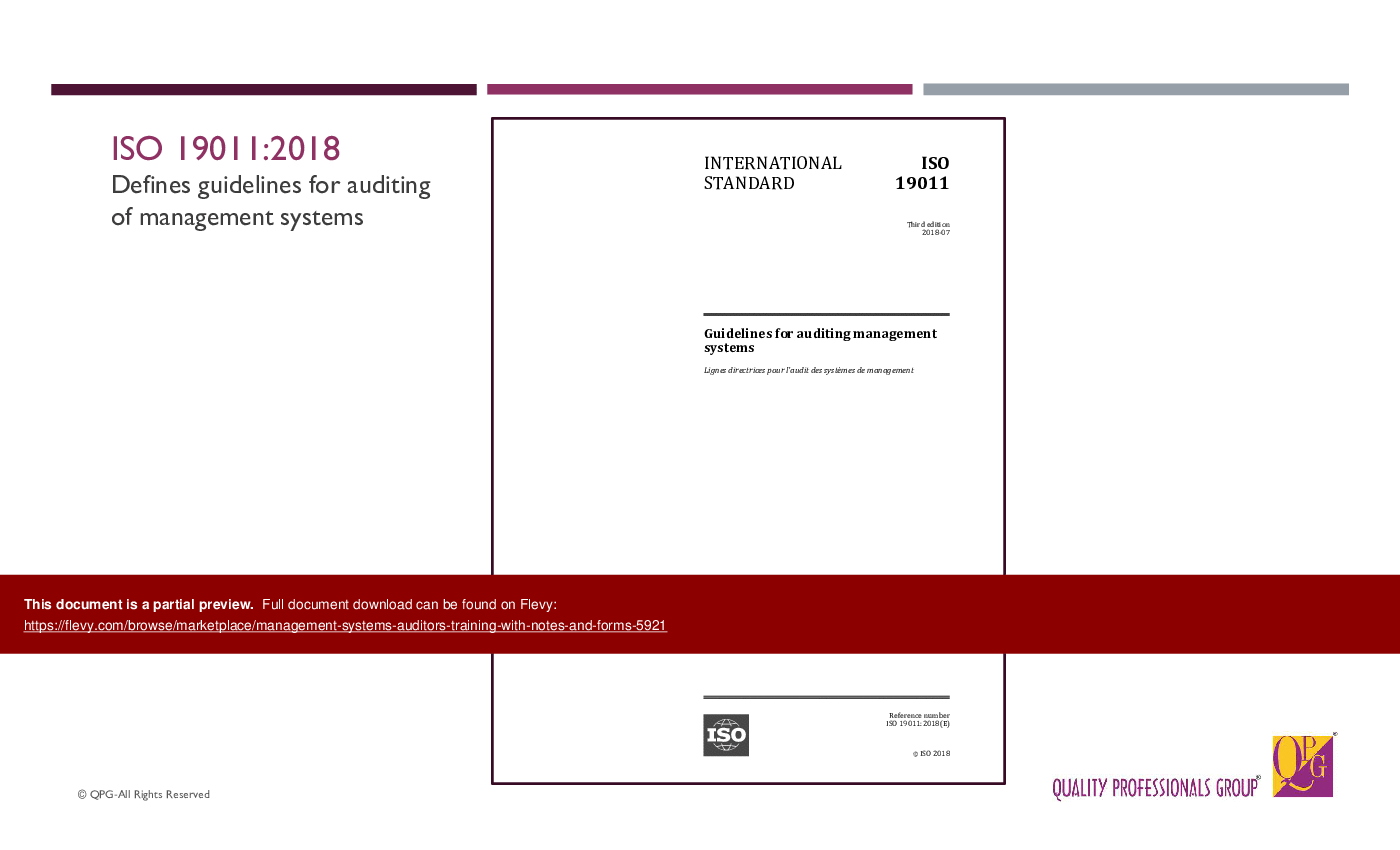
The guidelines on auditing given in this presentation are based on an ISO standard on this subject, i.e. ISO 19011:2018.
The program includes detailed guidelines on planning, conducting & reporting audits of management system standards formulated by ISO on various disciplines of management, e.g. Quality (ISO 9001), Environment (ISO 14001), Energy (ISO 50001), Occupational Health & Safety (ISO 45001), Food safety (ISO 22000), Information security (ISO 27001), IT service delivery (ISO 20000), etc.
There are other non-ISO standards, like IATF 16949 and AS9100, SA8000, etc. that also use the same auditing methodology and will greatly benefit from the use this standard, ISO 19011.
After going through this presentation you shall be able to understand:
a) The purpose of management system standards
b) Concept of management system auditing
c) Definition of audit and other related terms
d) Types of audit
e) 7 principles of auditing
f) 4 stages of management system auditing (based on PDCA)
1. Audit planning & preparation (audit program preparation & audit planning)
2. Audit execution (methods to conduct audit & writing of audit report)
3. Audit monitoring & completion
4. Audit follow-up & improvement
g) 2 streams of auditing process: audit program management & audit execution
h) Auditor competence requirements & methods of their evaluation
The presentation has been prepared by our highly qualified, trained and experienced quality professional & Lead Auditor in various management system standards with over 30 years of experience in training, consulting, auditing & certification of ISO standards.
There are 5 important template forms of auditing that are included in this pack and can be used while designing & operating a management system audit process. The included forms are:
1. Audit program
2. Audit plan
3. Audit checklist
4. Audit report
5. Non-conformity & corrective action report
The detailed notes that are are given below the slides are not visible in the preview of the document, but the same will be visible on your purchase.
The presentation consists of the following contents:
Title page
Program contents
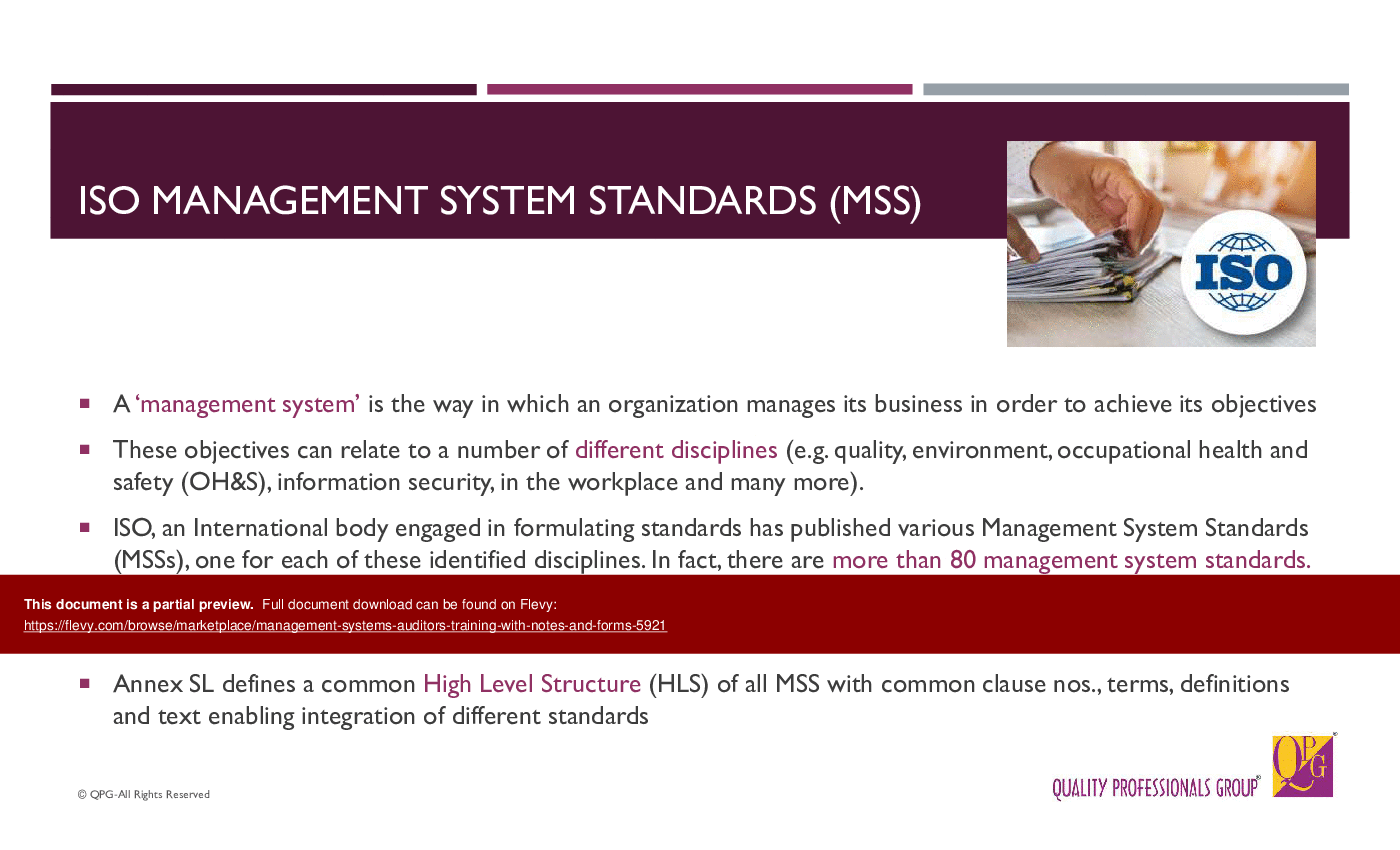
ISO management system standards
What are these standards
Popular management system standards
Need to asses compliance
ISO 19011:2018 Auditing guidelines standard
History of ISO 19011
Scope of this presentation
Management system audits
What is an audit?
Audit ? the ISO definition
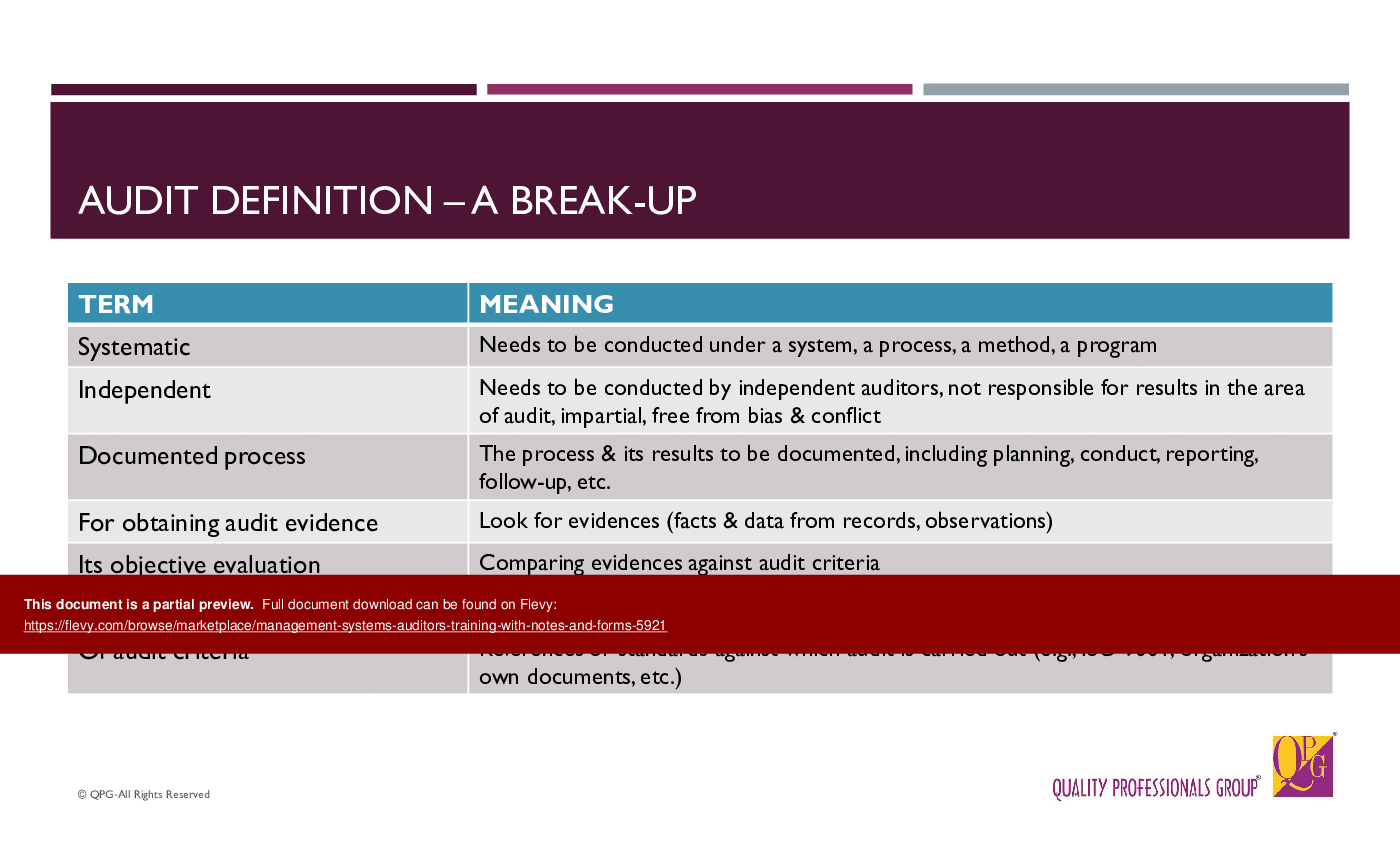
Audit definition ? a break-up
Audit ? in plain English
Types of audit
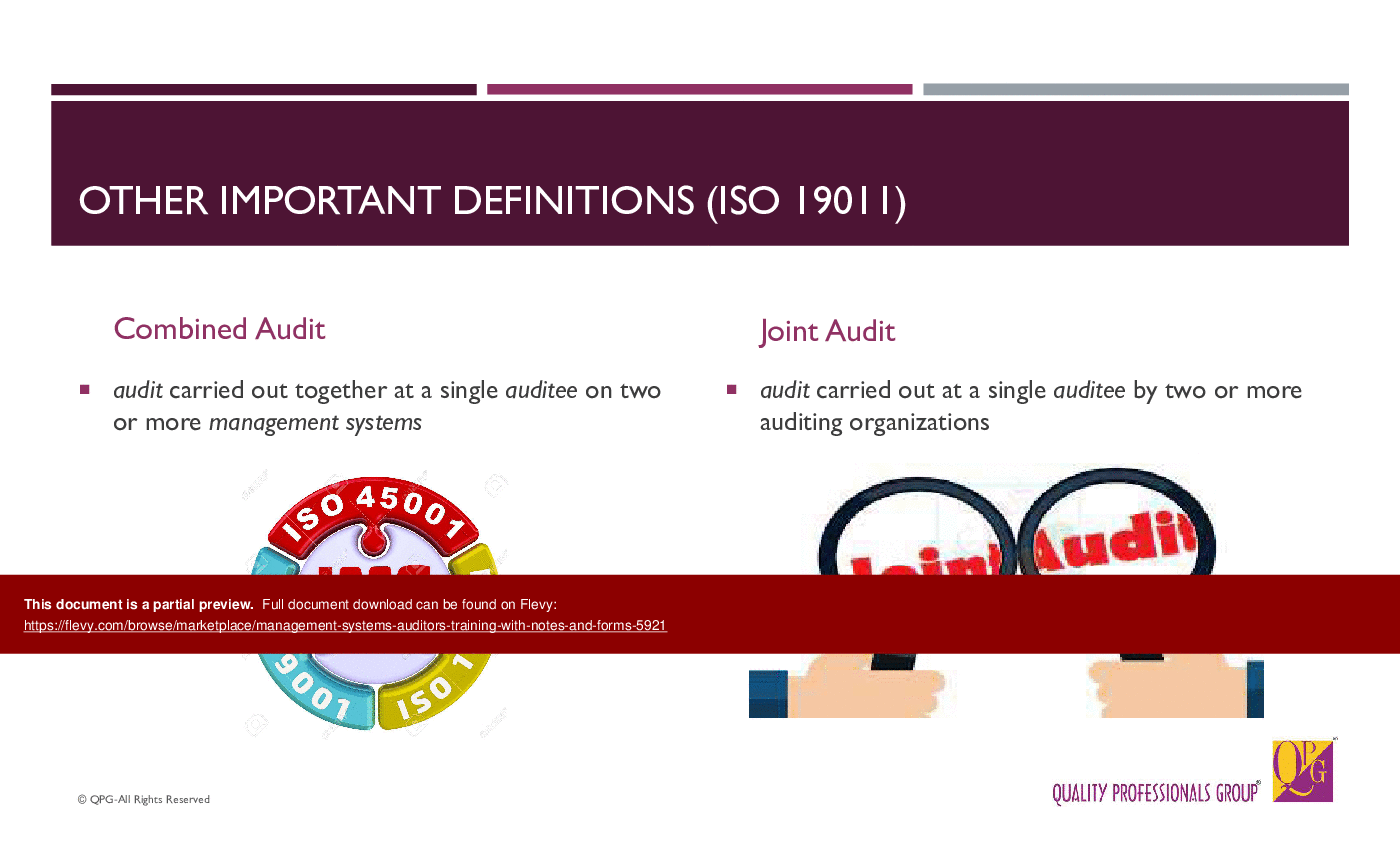
Other Important Definitions (ISO 19011)
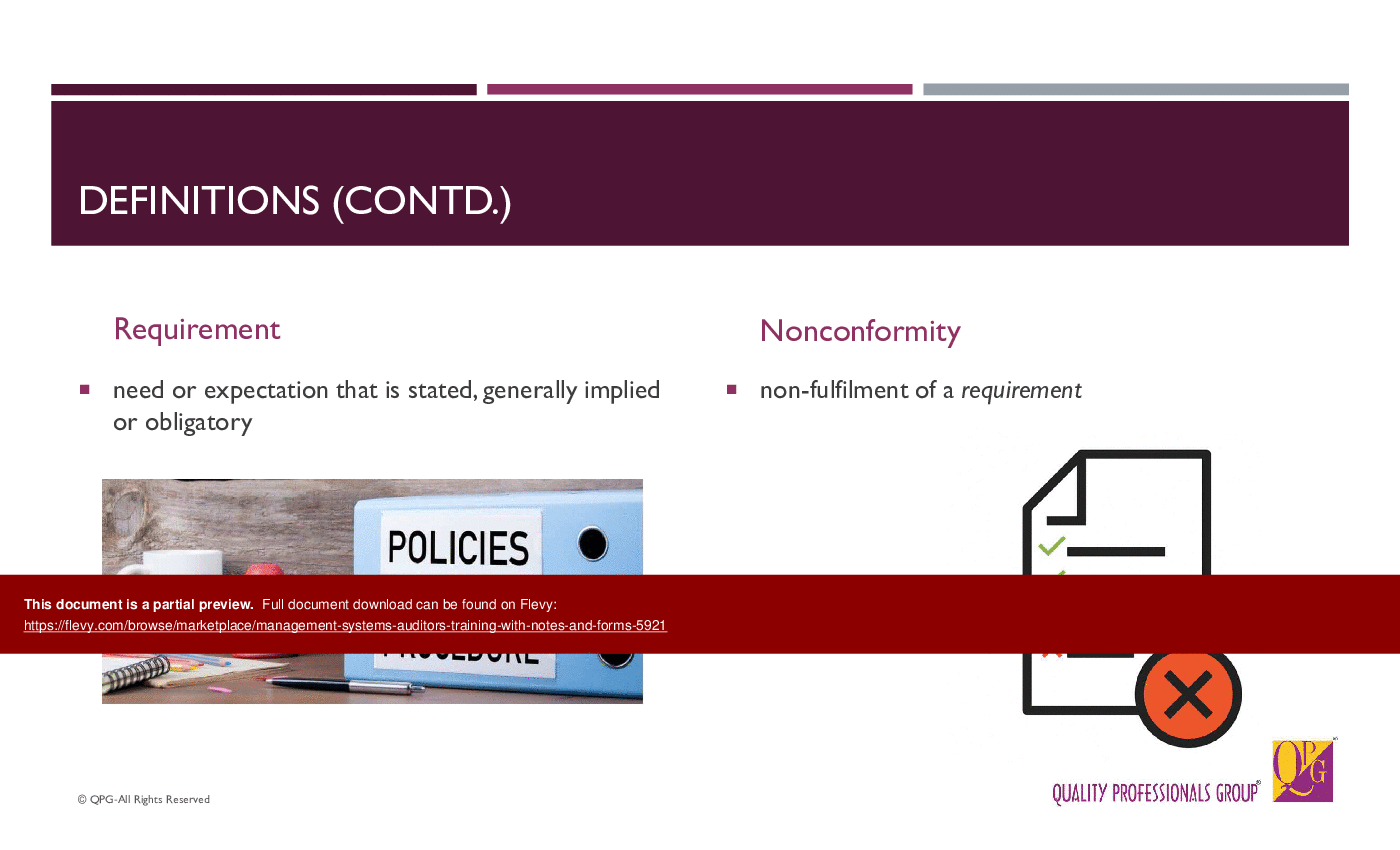
Definitions (Contd.)
7 Principles of Audit
7 Principles ? Graphic
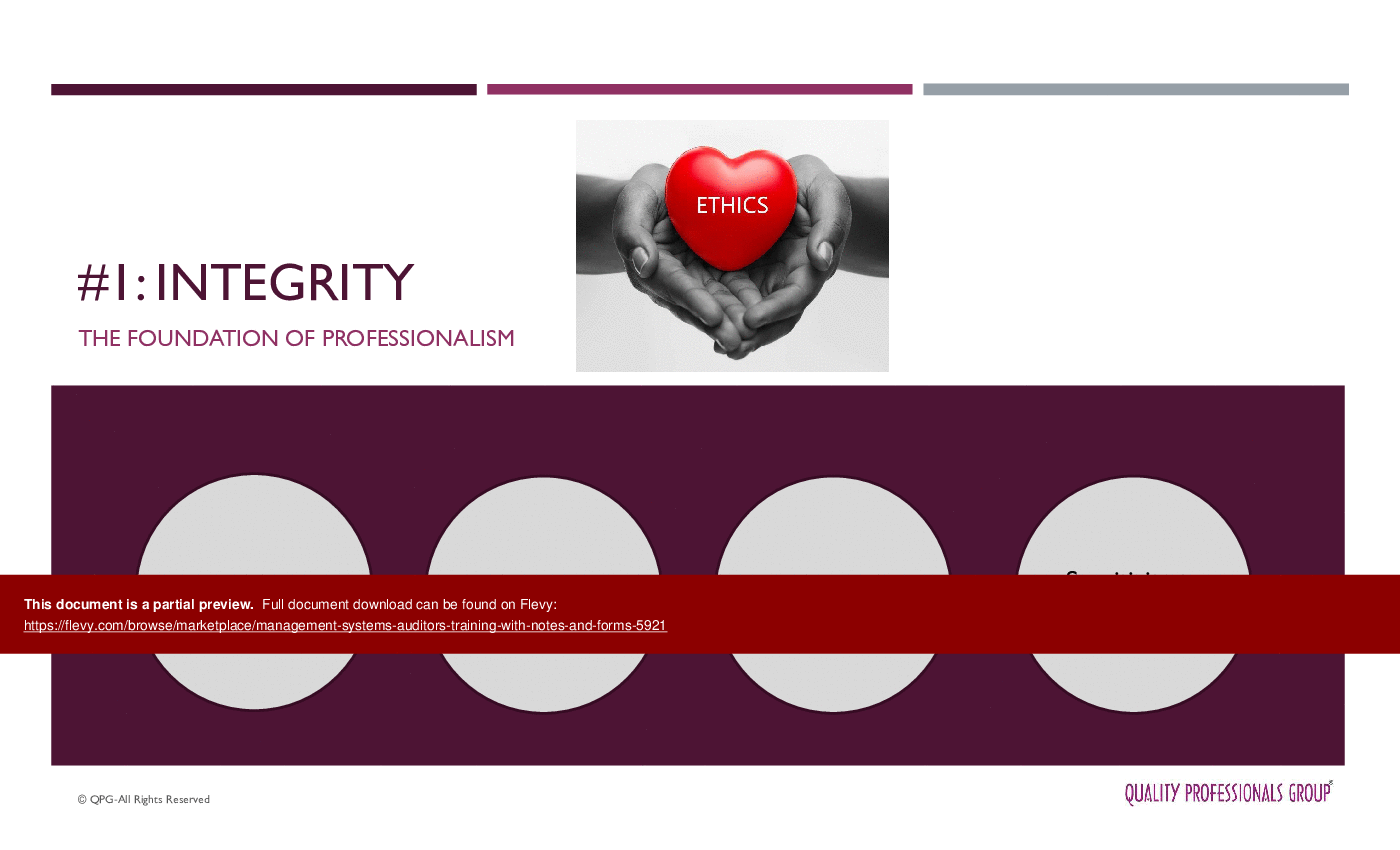
#1: Integrity
#2: Fair presentation
#3: Due professional care
#4: Confidentiality
#5: Independence
#6: Evidence-based approach
#7: Risk-based approach
Audit Process
4 stages of Audit
2 Streams of Audit
Audit Process Flow (ISO 19011:2018)
1 Audit Planning & Preparation
Hierarchy of Audit Planning ? Terms
Audit Program
Audit Plan
Preparing the Audit program
Why the Audit? (Determining the Objectives of audit)
Who can be an Audit Program Manager?
What are the risks in audit?
What are the opportunities in audit?
How extensive the audit should be?
How extensive the audit should be? (Contd.)
What resources are needed for the audit?
Audit Program Contents (Example)
Communicate the ?Audit program'
Initiating Program implementation
Individual Audit objectives, scope & Criteria
Selecting the audit methods
On-site vs Remote Audits
Selecting the audit team
Audit Team Competence
Handing over to team leader
Audit Information (Example)
Preparing For the Audit (By Audit team Leader)
Audit Initiation
Document review
Audit Plan Preparation
Audit Plan Contents (Example)
Audit Sampling
Audit Sampling (Contd.)
Audit Checklists
Typical Audit Checklist Form
Other Personnel in Audit
2 Conducting the Audit
Conducting Audit (Major Activities)
Opening Meeting
Audit Execution (Collecting and verifying information)
Important audit Definitions
audit Definitions (Contd.)
Information Collection & Verification Process
Audit Triangle of information sources
How to interview people?
Types of Questions
General Open-ended Questions
Advantages of open ended questions
Open-ended Questions ? Do's and Don'ts
Closed ended questions
Appreciative Inquiry
How to Observe?
Examples of Observations
Verify documented Information
4C's of Documents
Examples of Documents to review
Auditor's Seven Friends
Audit Evidence
Objective Evidence
Follow the Trail
Process Approach to auditing
Audit Time Wasters
Audit Records
Audit Findings
Grading of Non-conformities
Generally accepted definitions of Major & Minor NCs
Communication during audit
Preparation for closing Meeting
Closing Meeting
Preparing Audit Report
Audit Report Contents
Recording Nonconformities
Non-conformity & Corrective Action Report
3 Monitor the Audit
Monitoring by Audit Manager
Monitoring Audit Results
Completing Audit
4 Follow-up & Improvement
Follow-Up Audits
improving audit program
Auditor Competence
Personal Behavior
Knowledge & Skills ? Generic
Knowledge & Skills ? Discipline and sector-specific
Leader competence
Competence Criteria ? Quantitative
Competence Criteria ? Qualitative
Auditor Evaluation Method(s)
Maintaining & Improving Competence
A Bad Auditor
An auditor should?
Questions?
Thank You!
The training material includes comprehensive sections on audit definitions, types, and principles. It also covers audit planning, execution, and follow-up in detail.
Got a question about the product? Email us at support@flevy.com or ask the author directly by using the "Ask the Author a Question" form. If you cannot view the preview above this document description, go here to view the large preview instead.
Executive Summary
The ISO Management Systems Auditor's Training program, based on ISO 19011:2018, is designed to enhance auditing skills across various management system standards, including Quality, Environment, Occupational Health & Safety, Information Security, and Automotive Quality. This training equips participants with the knowledge and tools necessary to conduct effective audits, ensuring compliance and continuous improvement within organizations. The program includes comprehensive tutor notes and audit forms, making it an invaluable resource for professionals seeking to deepen their understanding of management system audits.
Who This Is For and When to Use
• Quality Managers and Auditors responsible for internal and external audits
• Compliance Officers ensuring adherence to ISO standards
• Consultants advising organizations on management system implementation
• Training Coordinators developing audit training programs
• Senior Management overseeing audit processes and compliance
Best-fit moments to use this deck:
• During the onboarding of new auditors to familiarize them with ISO standards
• As a refresher course for experienced auditors seeking to update their skills
• In preparation for upcoming audits to ensure all team members are aligned
• When implementing new management systems or updating existing ones
Learning Objectives
• Define the key principles and processes of management system audits
• Build effective audit plans that align with ISO standards
• Establish auditor competence requirements and assessment methods
• Conduct audits systematically, ensuring objective evaluation of compliance
• Monitor audit processes and follow up on findings for continuous improvement
• Utilize audit forms and documentation to support audit activities
Table of Contents
• ISO Management System Standards (page 3)
• Management System Audits (page 5)
• Audit Definitions & Types (page 7)
• Audit Principles (page 9)
• Audit Process – 4 Stages (page 11)
• Audit Planning & Preparation (page 13)
• Audit Execution (page 15)
• Audit Monitoring & Completion (page 17)
• Audit Follow-Up & Improvement (page 19)
• Auditor Competence (page 21)
Primary Topics Covered
• ISO Management System Standards - Overview of various ISO standards that guide organizational management practices across disciplines.
• Management System Audits - Explanation of what constitutes an audit, including its purpose and significance in compliance verification.
• Audit Definitions & Types - Clarification of key audit terms and the different types of audits (1st, 2nd, and 3rd party).
• Audit Principles - Seven foundational principles that guide effective auditing practices.
• Audit Process - Detailed breakdown of the 4 stages of the audit process: planning, conducting, monitoring, and follow-up.
• Auditor Competence - Requirements and skills necessary for auditors to perform effectively in various contexts.
Deliverables, Templates, and Tools
• Audit program templates for scheduling and managing audit activities
• Audit plan examples detailing objectives, scope, and criteria
• Checklists for conducting audits and recording findings
• Forms for documenting non-conformities and corrective actions
• Guidelines for preparing audit reports and communicating findings
• Tools for evaluating auditor competence and performance
Slide Highlights
• Overview of ISO Management System Standards and their importance
• Detailed explanation of the audit process stages and their interconnections
• Visual representation of the 7 principles of auditing
• Examples of audit checklists and documentation forms
• Key definitions and terms relevant to management system audits
Potential Workshop Agenda
Introduction to ISO Standards (30 minutes)
• Overview of ISO management system standards
• Discussion on the importance of compliance
Audit Process Overview (60 minutes)
• Breakdown of the 4 stages of auditing
• Interactive session on planning and preparation
Conducting Effective Audits (90 minutes)
• Hands-on practice with audit checklists
• Role-playing scenarios for audit execution
Monitoring and Follow-Up (30 minutes)
• Strategies for monitoring audit results
• Discussion on follow-up actions and improvements
Customization Guidance
• Adapt audit program templates to fit specific organizational needs and contexts
• Modify audit checklists to align with unique management system requirements
• Incorporate organization-specific terminology and metrics into training materials
• Tailor training sessions based on the experience level of participants
Secondary Topics Covered
• Risk management in the context of auditing
• The role of technology in modern auditing practices
• Best practices for conducting remote audits
• Strategies for effective communication during audits
• Continuous professional development for auditorsDocument FAQ
What is the purpose of an audit?
An audit aims to verify compliance with established standards and identify areas for improvement within management systems.
What types of audits are covered in this training?
The training covers 1st party (internal), 2nd party (supplier), and 3rd party (certification) audits.
How is auditor competence assessed?
Auditor competence is assessed based on qualifications, experience, and demonstrated skills in conducting audits.
What are the key principles of auditing?
The 7 principles include integrity, fair presentation, due professional care, confidentiality, independence, evidence-based approach, and risk-based approach.
What resources are needed for conducting an audit?
Resources include financial support, competent auditors, time allocation, and access to necessary documentation.
How can audit findings be communicated effectively?
Audit findings should be communicated clearly and concisely during closing meetings and through written reports.
What is the significance of follow-up audits?
Follow-up audits ensure that corrective actions have been implemented effectively and that non-conformities are addressed.
What tools are provided in this training?
The training provides templates, checklists, and forms to assist in planning, conducting, and documenting audits.
Glossary
• Audit - A systematic, independent process for obtaining evidence and evaluating it against criteria.
• Auditor - A person who conducts an audit.
• Auditee - The organization or part of the organization being audited.
• Nonconformity - The failure to fulfill a requirement.
• Audit Program - A set of planned audits for a specific time frame and purpose.
• Audit Plan - A description of the activities and arrangements for a specific audit.
• Objective Evidence - Data supporting the existence or verity of something.
• Corrective Action - Action taken to eliminate the cause of a detected nonconformity.
• Follow-Up Audit - An audit conducted to verify the implementation of corrective actions.
• ISO 19011 - Guidelines for auditing management systems.
• Management System Standards (MSS) - Standards that define the requirements for various management systems.
• Risk-Based Approach - An auditing approach that considers risks and opportunities.
• Evidence-Based Approach - A method for ensuring reliable audit conclusions based on verifiable evidence.
• Combined Audit - An audit of 2 or more management systems conducted at a single auditee.
• Joint Audit - An audit carried out by 2 or more auditing organizations at a single auditee.
• Audit Findings - Results of the evaluation of collected audit evidence against audit criteria.
• Audit Checklist - A tool used to guide auditors during the audit process.
• Audit Report - A document summarizing the audit findings and conclusions.
• Continuous Professional Development (CPD) - Ongoing training and education to maintain and improve auditor competence.
• Management Representative (MR) - The individual responsible for ensuring the audit program is effectively managed.
• Stakeholders - Individuals or groups with an interest in the audit outcomes.
Source: Best Practices in Audit Management, ISO 19011 PowerPoint Slides: ISO Management Systems Auditor's Training-with Notes & Forms PowerPoint (PPTX) Presentation Slide Deck, Quality Professionals Group
This document is available as part of the following discounted bundle(s):
Save %!
ISO 9001:2018 QMS Auditor Course
This bundle contains 3 total documents. See all the documents to the right.
|
Receive our FREE presentation on Operational Excellence
This 50-slide presentation provides a high-level introduction to the 4 Building Blocks of Operational Excellence. Achieving OpEx requires the implementation of a Business Execution System that integrates these 4 building blocks. |










